
Commercial Aviation
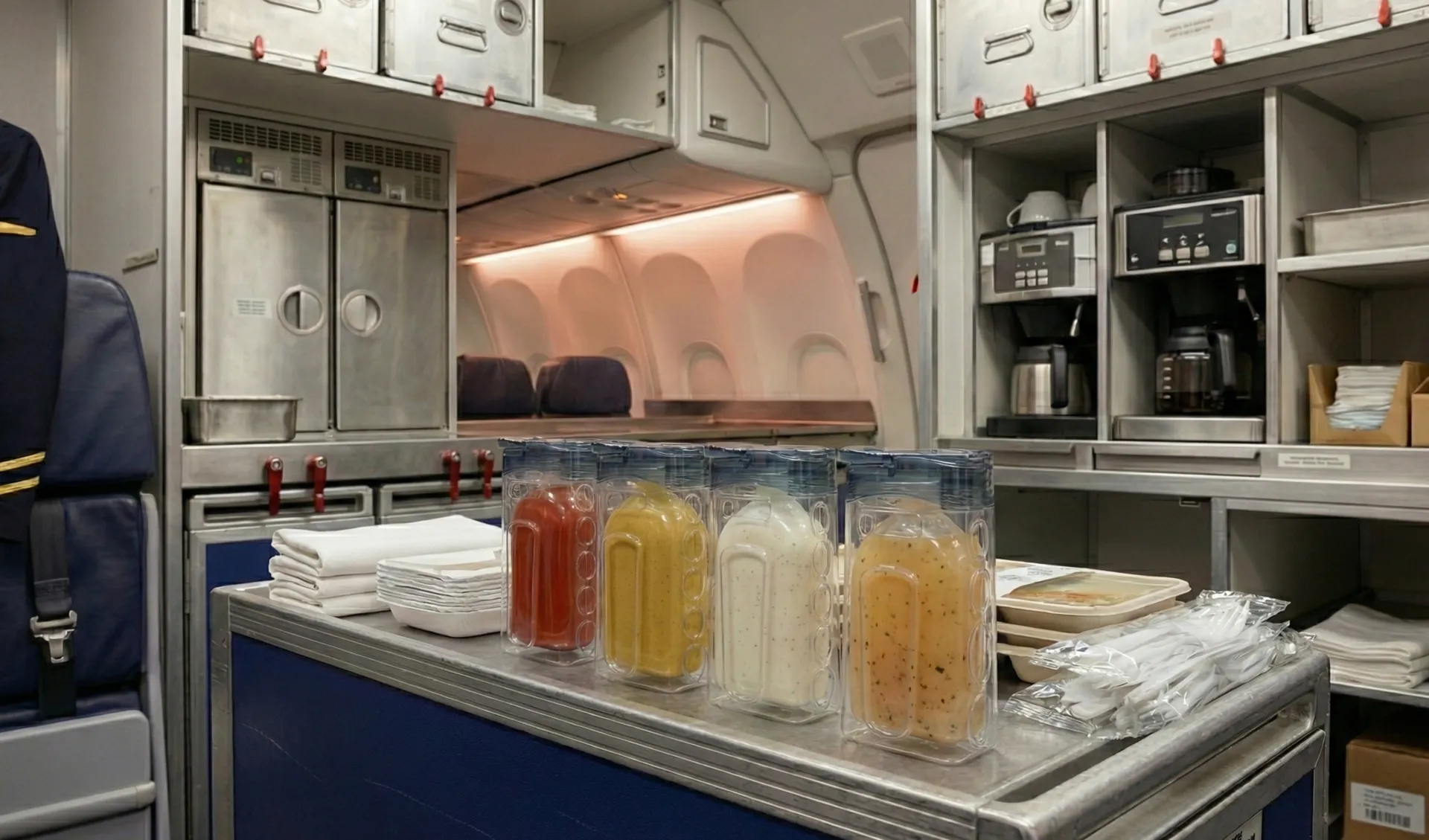
Airlines serve condiments in heavy glass jars because squeeze bottles spurt at altitude. Anti Gravity Bottle is the first squeeze bottle that doesn't.
The Problem
Single-Serve Packaging: Heavy, Wasteful, Expensive
Airlines serve condiments in individual glass jars, foil packets, and rigid plastic cups. A single meal service on a 200-passenger flight uses 200+ individual condiment packages. Glass is heavy, fragile during turbulence, and generates massive waste. 34% of cabin food and beverage waste is untouched, costing the industry $6 billion per year in landfilled resources.
Every 1 kg of weight reduction saves an airline ~$4,210 per year in fuel costs per aircraft
Cabin Pressure Makes Squeeze Bottles Impossible
The reason airlines use heavy glass jars instead of lighter squeeze bottles is simple physics. At cruise altitude (6,000-8,000 ft equivalent cabin pressure), squeeze bottles pressurize internally. Open one and it spurts. That is why no airline uses squeeze bottles for condiment service, despite the weight and waste advantages they would offer.
The Weight Penalty Is Enormous at Scale
Southwest Airlines saved 148,000 gallons of fuel by switching from glass bottles to cans. United saved 643,000 kg of fuel by switching to lighter magazine paper. Individual glass condiment jars at ~50g each, across hundreds of passengers per flight, add up to kilograms of avoidable weight on every meal service, every flight, every day.
The Anti Gravity Bottle Advantage
Replace Hundreds of Glass Jars With a Few Squeeze Bottles
One galley-size Anti Gravity Bottle per condiment type replaces 50-200 individual glass jars or packets per meal service. Flight attendants squeeze portions into ramekins at the cart. Faster service, dramatically less weight, dramatically less waste.
Pressure-Safe at Any Altitude
The dual-state air channel equalizes pressure continuously during flight. No spurt when opened at cruise altitude. This is the only squeeze bottle technology that solves the cabin pressure problem, which is exactly why airlines have never been able to use squeeze bottles before.
Refillable: Swap the Pouch, Reuse the Bottle
The outer bottle stays in the galley permanently. Between flights, catering crews swap the inner pouch. No cleaning, no cross-contamination, no waste beyond the lightweight pouch. One outer bottle can last hundreds of flight cycles.
Amenity Kits That Actually Work at 35,000 Feet
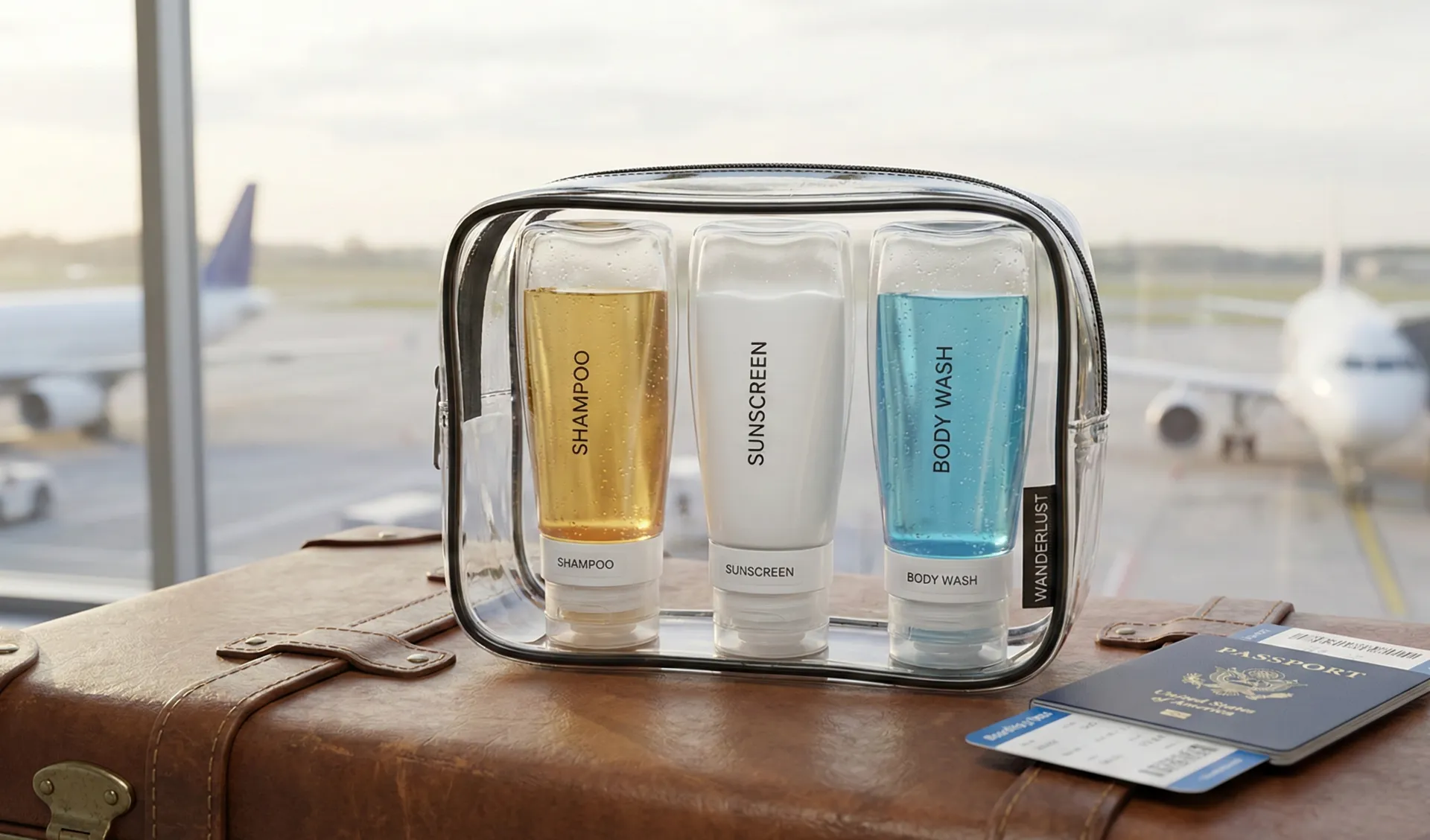
Beyond galley service, the same technology applies to amenity kit toiletries and travel-size personal care products. Premium cabin passengers receive leak-proof, pressure-safe bottles that work at altitude without the 'squeeze out the air first' workaround.
Market Opportunity
Market Size
$500M+ (amenity kits) + $20B+ (in-flight catering)
Replacing glass condiment jars with PESD squeeze bottles could save ~9 kg per meal service per aircraft. At $4,210/kg/year in fuel costs, that translates to roughly $38,000 per aircraft annually. For a fleet of 300 aircraft, potential fuel savings exceed $11 million per year from condiment packaging alone. Add amenity kits ($500M+ market) and crew toiletries, and the total addressable opportunity across airline operations is substantial.
Current Approaches vs. Anti Gravity Bottle
Current Approach
Individual glass jars, foil packets, rigid plastic cups, and single-serve sachets. Heavy, wasteful, and expensive at scale. Airlines cannot use squeeze bottles because of cabin pressure. The industry accepts this weight and waste penalty as unavoidable.
Limitations
No squeeze bottle technology exists that handles cabin pressure changes. Airlines are stuck choosing between heavy rigid packaging (glass, plastic cups) that resists pressure, or lightweight squeeze formats that fail at altitude. There is no middle ground.
The Anti Gravity Bottle Difference
Anti Gravity Bottle is the middle ground. Lightweight squeeze dispensing with automatic pressure equalization. Replace hundreds of individual heavy packages with a few reusable squeeze bottles per galley. The fuel savings alone justify the switch before counting waste reduction and service speed improvements.
Why Now
Airlines are under intense pressure to reduce weight, waste, and single-use plastics simultaneously. SAS eliminated 37 tons of single-use plastics by switching packaging. Etihad eliminated 233 million single-use plastic items. IATA sustainability mandates are tightening. Anti Gravity Bottle lets airlines replace heavy glass condiment jars with lightweight, reusable squeeze bottles for the first time, because it is the first squeeze bottle that works at cabin pressure.
Related Industries

Ready to Explore Licensing?
Get the full technical white paper with market data, implementation roadmap, and licensing models.
Request White Paper