
Vaccines & Multi-Dose Pharmaceutical
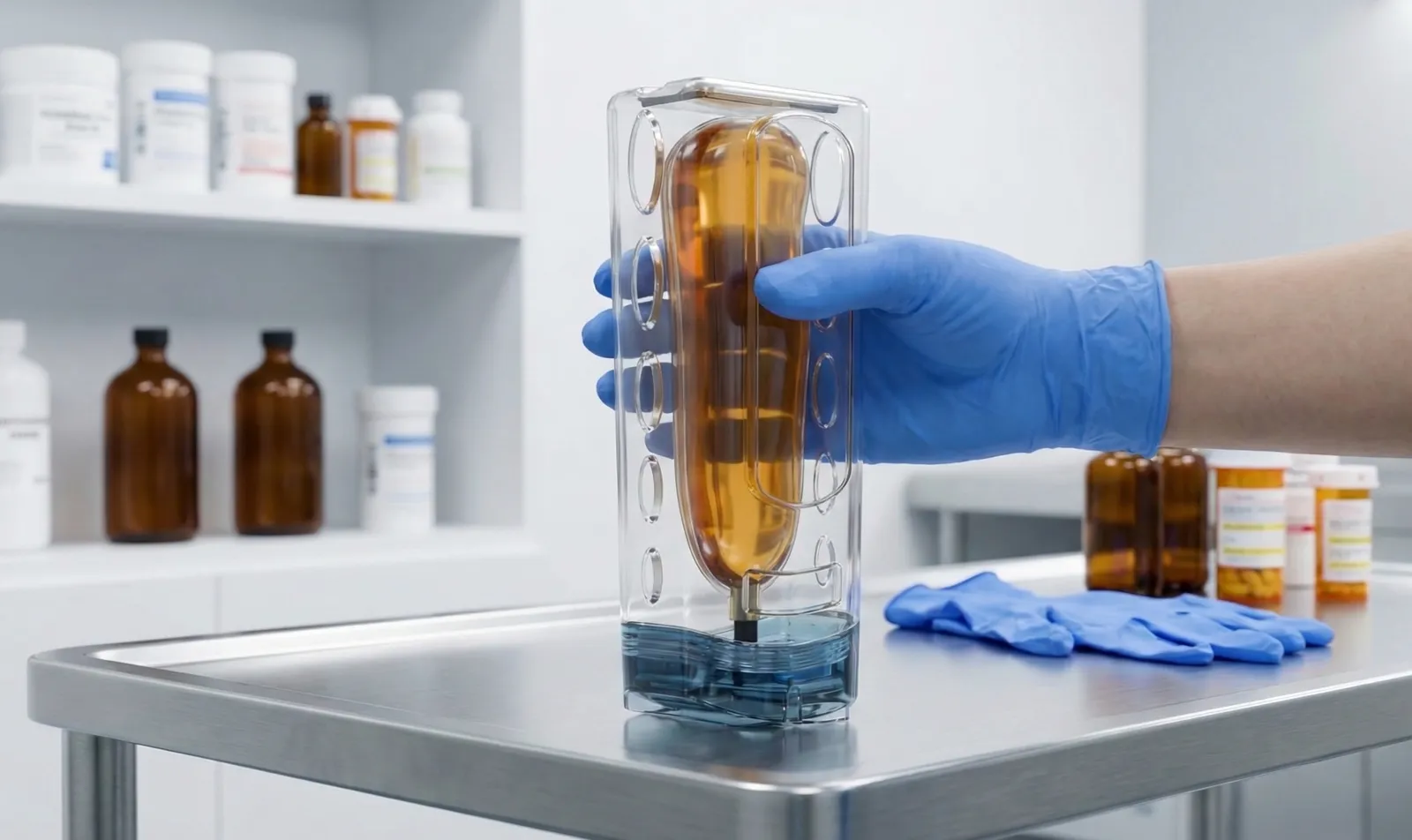
Every needle puncture through a rubber stopper risks contamination and releases rubber particles into the vaccine. Anti Gravity Bottle replaces the stopper with a sealed inner bag and sterile port, enabling preservative-free multi-dose containers for the first time.
The Problem
Rubber Coring Contaminates Vaccines
Every time a needle punctures a rubber stopper, it can shear off microscopic rubber particles into the vaccine. Studies show rubber coring occurs in 10-33% of punctures. These particles can cause phlebitis, granulomas, and allergic reactions.
Rubber coring occurs in 10-33% of needle punctures through stoppers
Preservatives Required for Multi-Dose Vials
Repeated needle punctures introduce contamination risk, which is why multi-dose vials require preservatives like thimerosal. Preservative-free formulations are limited to expensive single-dose vials, creating massive waste and cost. Single-dose vials cost 3-10x more per dose.
Single-dose vials cost 3-10x more than multi-dose formats
Vacuum Resistance and Dosing Inconsistency
As doses are withdrawn from traditional vials, a vacuum builds inside. Clinicians must inject air to compensate, introducing another contamination vector. Each successive draw becomes harder and less precise.
The Anti Gravity Bottle Advantage
Zero Needle Puncture, Zero Rubber Coring
A sterile luer-lock port replaces the rubber stopper entirely. Clinicians connect a syringe directly to the port and draw vaccine by squeezing the outer shell or pulling the plunger. Both work because the inner bag simply collapses. No needle enters the vaccine chamber. No rubber particles. No air injection step needed.
Preservative-Free Multi-Dose Containers
Because no needle ever pierces the container and no air contacts the vaccine, the contamination vector that necessitates preservatives disappears. Multi-dose economics with single-dose sterility.
Consistent Dosing From First to Last
The collapsing inner bag eliminates vacuum buildup. Pressure equalization ensures identical dispensing force from the first dose to the last. The clear outer shell shows exactly how much vaccine remains.
Market Opportunity
Market Size
$10-26B
Growth
Prefilled syringe market growing 10%+ CAGR to $26B by 2034
The industry is spending billions moving from multi-dose vials to prefilled syringes specifically to avoid rubber coring and contamination. Anti Gravity Bottle offers a third path: multi-dose economics with single-dose sterility. That value proposition neither format currently delivers.
Current Approaches vs. Anti Gravity Bottle
Current Approach
Multi-dose vials with rubber stoppers (require preservatives), single-dose vials (expensive, wasteful), and prefilled syringes ($10.6B market, highest cost per dose).
Limitations
Multi-dose vials risk contamination and coring. Single-dose vials cost 3-10x more and generate massive medical waste. Prefilled syringes are the most expensive format and require cold-chain storage per unit.
The Anti Gravity Bottle Difference
Anti Gravity Bottle enables preservative-free multi-dose vaccine containers without needle puncture. A sterile port replaces the rubber stopper. The collapsible inner bag maintains consistent dosing with no vacuum buildup. Cost comparable to standard vials with sterility comparable to prefilled syringes.
Why Now
WHO and CDC are pushing for reduced preservative use and safer multi-dose formats. The prefilled syringe market is growing 10%+ CAGR because of rubber coring concerns. Global vaccine demand continues to increase. Developing countries need affordable multi-dose solutions that don't compromise sterility. The PESD mechanism maps directly to existing clinical workflows.
Related Industries
Ready to Explore Licensing?
Get the full technical white paper with market data, implementation roadmap, and licensing models.
Request White Paper